
~/philosophy / performance-marketing
Creative is the new targeting
As the ad platforms automate the buy, the creative is the variable that decides who converts — so the system that generates and learns from it is the real performance lever.
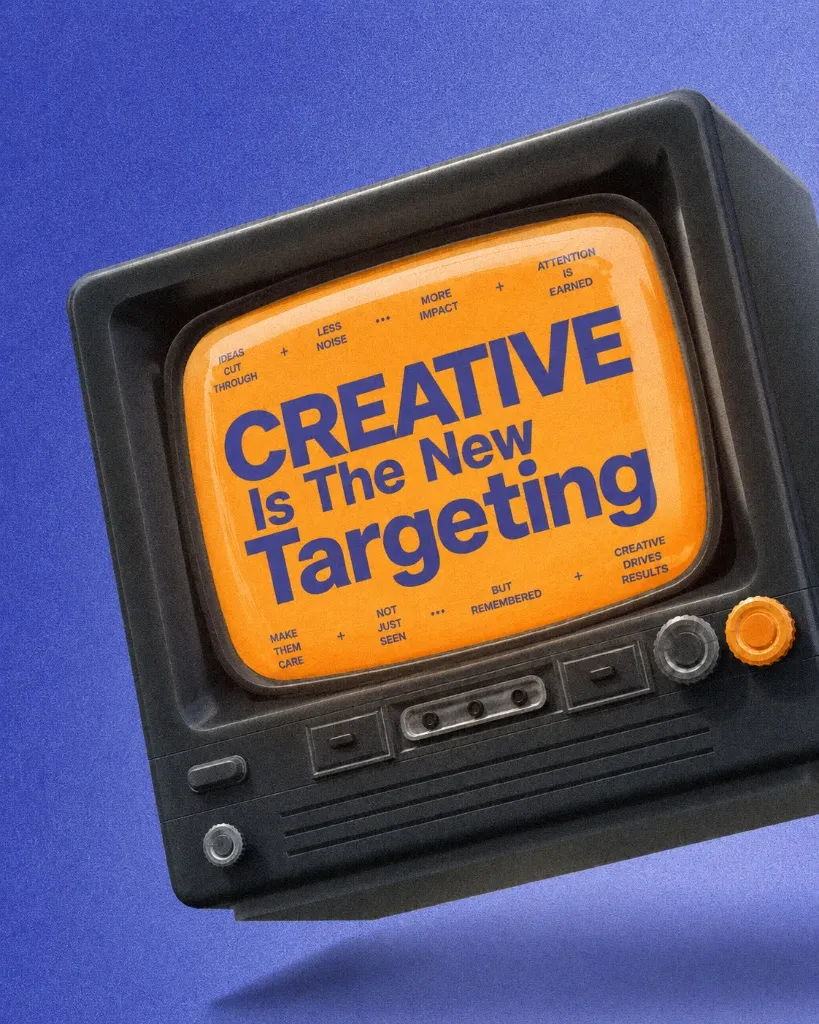
As the ad platforms automate the buy, the creative is the variable that decides who converts — so the system that generates and learns from it is the real performance lever.
Targeting is now the platform’s job, not yours. Meta and Google decide who sees an ad; the creative decides whether that person acts. The highest-leverage variable left to a marketer is the asset itself, and the brand that tests creative fastest wins the auction.
For a decade, performance marketing was a targeting game. You built audiences, layered exclusions, and won by reaching the right person more cheaply than the next bidder. That edge is gone. Broad targeting plus a strong signal now beats hand-built segments on every major platform, because the algorithm sees more data than any media buyer can. The buy has been automated to commodity. Two advertisers feeding the same machine the same budget reach near-identical audiences.
So the question shifts. If everyone can reach the same people, the only thing that separates you is what those people see. Creative is no longer the wrapper on the campaign. It is the campaign.
Treating creative as the lever does not mean hiring a better art director. It means building a system that can produce, launch, and judge variants faster than the competition can brief one. The constraint was never imagination. It was throughput: the studio that bills per asset on its own timeline, the queue that turns a brief around in days, the brand review that happens after the spend.
Whilter runs that work as one connected engine instead of a hand-off chain. Operated by AI agents that know your brand, a single account on ElevateOS generates 40 to 60 brand-compliant variants per campaign and launches them in under 30 minutes. That throughput is what lets you treat creative as a test surface rather than a deliverable. This is the same operating shift we argue in the agency model is broken: the queue becomes a system, and the economics invert.
Speed is only worth it if the market rewards the winners you find. It does. Wonderchef shifted from waiting on assets to testing winners every week and saw a +166% lift in link CTR. The audience did not change. The targeting did not change. More on-brand creative, tested faster, moved the metric that the platform uses to decide who else gets the ad.
Wonderchef shifted from waiting on assets to testing winners every week and saw a +166% lift in link CTR.
— same audience · same targeting · faster creative
The risk in volume is drift: ship 60 variants and most performance teams ship 60 chances to break the brand. The engine closes that gap. Bombay Shaving Co. ran brand rules inside the system and hit 68% creative approval, so the speed did not cost compliance. Volume without guardrails is noise. Volume the brand custodian trusts is a testing program.
When targeting was the edge, a slow creative process was a tax. Now it is the loss. If creative decides conversion and the platform serves your winners to a wider audience automatically, then every week you spend waiting on a studio is a week your competitor compounds a lead you cannot see in a dashboard. The team testing 50 ideas a month learns faster than the one testing five, and the platform amplifies whatever it learns.
This is why creative velocity is not a production nicety. It is the performance program. The marketers who win the next cycle will be the ones who stopped treating creative as the thing they wait for and started treating it as the dial they turn. See how the engine does it across acquisition, nurture, and retention, then read the results.
Published 2026-06-20 · Whilter.AI